Blog

ISV-OEM relationships - where expectations (mis)match is the key
The relationship between an ISV and an OEM or hyperscaler is far more than a traditional partner model. It begins with platform consumption, deepens through technical integration, and can evolve into a powerful go-to-market engine. When built with clarity, trust and shared success metrics, this relationship can create long-term growth for the ISV, the vendor and their customers.
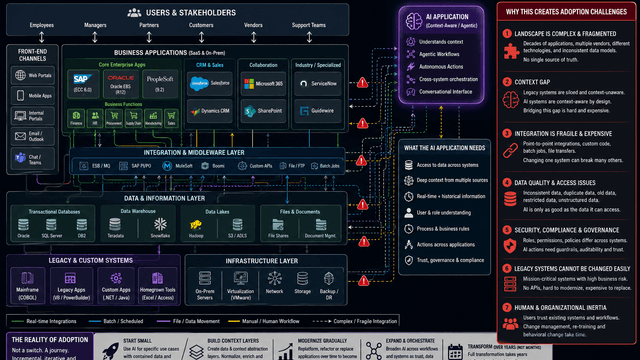
Why Enterprise AI adoption will be a marathon and not a 100m sprint
Everyone is talking about the “death of SaaS” in the AI era. But enterprise technology doesn’t evolve through overnight replacement. Legacy systems, deeply embedded workflows, and decades of integrations mean AI adoption will be gradual, layered, and far more complex than the hype suggests.
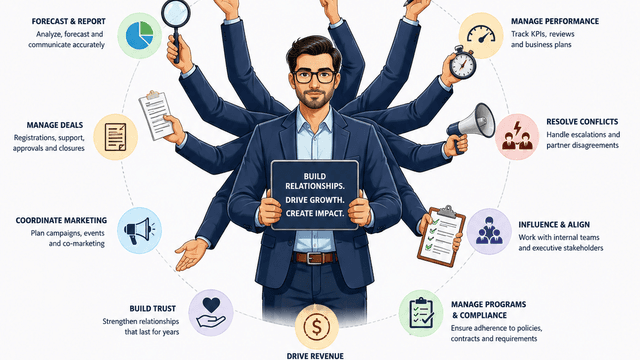
Channel Managers- Jack of all trades, expected to be masters of all too
Channel managers are often treated like indirect sales reps, but partner ecosystems operate very differently. Learn why channel roles fail, why trust and continuity matter, and how ecosystem-led growth is evolving.
Confessions of a former volume junkie
Most partnership strategies focus on volume but real impact comes from depth. Here’s why fewer, high-conviction partnerships consistently outperform broad, shallow ecosystems.
𝙃𝙪𝙢𝙞𝙡𝙞𝙩𝙮 𝙖𝙣𝙙 𝙘𝙪𝙧𝙞𝙤𝙨𝙞𝙩𝙮 𝙖𝙧𝙚 𝙢𝙮 𝙖𝙡𝙡𝙞𝙖𝙣𝙘𝙚 𝙥𝙡𝙖𝙮𝙗𝙤𝙤𝙠
In alliance leadership, curiosity reveals opportunity and humility builds trust. Learn how both create stronger strategic partnerships and more scalable partner ecosystems.
The view from the ground: Why the "Global" playbook needs a rewrite in APAC
You might be a market leader globally, but in a new APAC territory you’re often starting from zero—no local presence, no lighthouse customers, no air cover. This post explains why partner-led isn’t optional, how to invest early with MDFs and reciprocity, and what it takes to build durable growth across fragmented markets.
To launch and scale software products in India, lead with the ecosystem
India is not a market you brute-force with sales headcount. It is a market shaped by decades of partnership-led growth, deep practitioner expertise and local nuance. Long before global technology giants built direct sales teams here, they scaled through system integrators, distributors and alliance leaders who understood how India truly works. Today, this has created one of the world’s strongest pools of ecosystem and partner leadership talent. Whether you are a global product entering India or an India-built product going global, the winning move is the same: don’t start with sales. Start with ecosystems.
Designing GTM motion for Fintech in India: A market entry perspective
Entering India with a fintech product is never a simple lift-and-shift exercise. The market rewards teams that learn fast, sequence well, and adapt their GTM motion to how the ICP evaluates trust, risk, and switching cost. Across India and the broader APAC region, the companies that break through are the ones that treat the first six months as an exercise in decoding market behaviour, not executing volume. This article explores how GTM motions emerge when BD, partnerships, and ecosystem thinking work together, and how they shape the ground for a scalable sales engine later.
Your partner MDF isn't the problem, your strategy is.
Every quarter, the same question lands in executive meetings: "We spent millions on MDF. What did we actually get?" Usually? Uncomfortable silence. Campaigns launched. Events hosted. Reports filed. But trace that investment to actual outcomes (closed deals, customer adoption, recurring revenue) and the connection disappears. The funding mechanism isn't broken. How you think about it is.
The Architecture of Integration: MCP's Approach to Business System Connectivity
Most organizations don't lack systems. They've invested in CRMs, ERPs, and countless specialized tools. The challenge begins when AI needs to work across them. Traditional integrations connect data points, but AI requires context: understanding why data exists, how it can change, and where it fits in real workflows. The Model Context Protocol (MCP) addresses this by treating integration as an architectural problem that respects business logic, security boundaries, and the messy reality of how work actually gets done.
The APAC Enterprise GTM Playbook VCs don’t want you to know
Scaling in APAC with a US-style GTM is a guaranteed failure path. This playbook breaks down the real APAC enterprise buying journey, the partner-led scale model, and the 7-step GTM framework that has created billions in enterprise value. A must-read for founders entering APAC.

Understanding the Model Context Protocol (MCP)
Discover how the Model Context Protocol (MCP) enables AI to securely interact with PRM business applications like Channlworks, improving workflows, collaboration, and automation. Learn how MCP integrates seamlessly with existing tools and supports real work without adding complexity.