Beginning Upstream: The BDE Learning Loop
One of the most underestimated levers in India is the strategic BDE. In mature markets, BD often appears transaction-oriented. In market entry strategy esp India or broader APAC, BD is foundational. It is the first interpretive layer between the product and the market. A strong BDE functions as a decoder of market truth, not a generator of leads. Their early conversations reveal insights no research deck or analyst note can produce. They uncover:
• who feels the problem sharply
• who actually controls budget and approval
• who will drive implementation when the deal closes
These conversations surface the real ICP. Not the ICP imagined in planning sessions, but the one defined by urgency, risk tolerance, workflow friction, and regulatory anxiety.
This pattern exists across APAC, though it shows up differently. In Singapore, clarity emerges through structured requirements. In Indonesia, through community networks. In India, through a mix of operational pain and compliance considerations. A strategic BD operator knows how to read these nuances and translate them into direction. BD, in this phase, is not support. BD is strategy formation in real time.
From ICP to Business Case and Motion
Once the ICP sharpens, the motion becomes clearer. Some buyers require direct engagement because the product touches compliance, treasury, foreign exchange, or reconciliation. These buyers look first for regulatory comfort and operational assurance. Direct conversations set the frame.
Other buyers operate inside partner-owned workflows. Accountants, payroll processors, ERP implementers, and trade advisors influence daily financial decisions. When a product aligns naturally with these flows, BD and channel partnerships become the strongest entry point. These partners already carry trust.
A third category only unlocks through embedded distribution. Marketplaces, B2B SaaS platforms, and multi-party networks offer a doorway where reach and regulatory framing merge. If the platform trusts you, the buyer leans in.
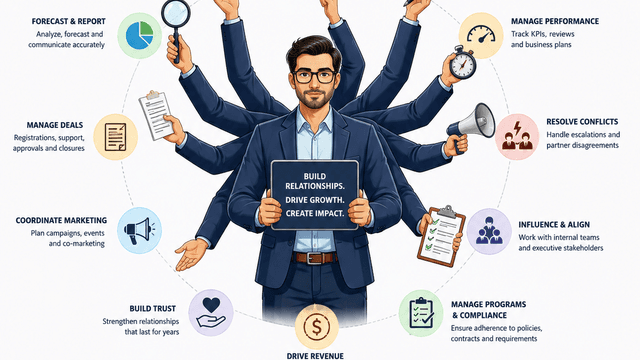
Across all three motions, the BD function is the connective tissue. BD is the one role that touches buyers, partners, and platforms before anyone else does. This gives BD a uniquely strategic vantage point that shapes the eventual GTM.
The Role of BD, Partnerships and Channels
BD sits at the center of early market entry in India. Partnerships and channels are not shortcuts to distribution. They are intelligence systems.
Boutique partners can reveal the market’s true language. They bring context, early credibility, and customers who adopt with intention. This creates a quiet moat that accelerates learning and lowers friction. Channels also help decode how adjacent players position similar tools. Their positioning and workflow insights often clarify where switching cost is lowest and where compliance questions surface most frequently.
Across APAC, these partner insights often determine the velocity of a GTM motion far more than direct outreach.
Sequencing the first 90 to 180 days
The complexity of India market entry lies not in the motions themselves but in the order in which they are deployed. A partner-led start often works best when the category is semi-familiar. Well-chosen boutique partners provide directional accuracy and early customers who articulate value clearly. This sets the foundation for the ICP narrative. In parallel, a focused ecosystem motion strengthens your presence. A few platforms in selected cities or verticals give structure to your GTM story and create a reference frame for buyers. Once objections repeat and compliance questions become predictable, a sales-led motion becomes productive. The organisation now understands what the buyer needs to feel safe enough to move.
The sequencing is not rigid. It is a rhythm. And BD is usually the one reading the cues.
Regulation and Moat Building
India’s regulatory environment is not a constraint. It is the architecture every GTM motion must align with.
- Direct builds trust through clarity and compliance assurance.
- Partnerships build distribution and interpretive strength.
- Ecosystem-led motions build embeddedness and reduce switching friction.
These collectively form the moat.Across APAC, fintech companies that endure are those whose motion, regulatory comfort, and moat reinforce each other.
Closing Perspective
India rewards teams that sequence thoughtfully, learn continuously, and design motions from early truths rather than inherited models. GTM in India is rarely a bold declaration. It is a steady unfolding of market signals that reveal the motion you should follow. When BD, partnerships, ecosystem plays, and direct engagement align with intent, the path opens. Growth becomes predictable. And market complexity transforms into navigable structure.
Let’s Connect
Madhuleena Medhi((LinkedIn)) is a global B2B GTM, Partnerships, and Business Development leader with 18+ years of experience across fintech, cross-border payments, SaaS, AI, and media, including over a decade as a people leader. An eclectic growth operator, she has built and scaled businesses across public-listed companies (Payoneer), F50 enterprises (WPP, Berkshire Hathaway), and VC-backed startups and scaleups (what3words, Klub, LetsVenture), driving outcomes from 0→1 and scaling 1→10. Currently, she advises fintechs on GTM strategy and compliance-led scale, spanning new market entry and expansion, new business incubation, and enterprise partnerships and GTM motions. She is known for crafting first-of-their-kind GTM models and ecosystem partnerships that unlock new revenue, accelerate adoption, and build durable product moats.